

Amber and Jade
Peaceful, harmonious and calming… this is Heavenly Music!
Perfect music for relaxation! Mellifluous flute-playing, gentle acoustic guitar, symphonic strings and pastoral nature sounds all help to produce one of the most peaceful, harmonious and calming albums ever written for deep relaxation and healing.
In a unique collaboration, Symbiosis have specially composed the soundtracks for four sets of guided meditations by the internationally acclaimed lecturer, healer and author Denise Linn. Amber and Jade includes a suite of music from her double album Phoenix Rising. It features one unforgettable piece entitled The Beauty Within which, in the words of critic Brian Lee, “approaches perfection” for this genre of music.
Perfect for therapists, with a playing time of 74 mins and a continuous flow of music.
Amber and Jade
Peaceful, harmonious and calming… this is Heavenly Music!
Perfect music for relaxation! Mellifluous flute-playing, gentle acoustic guitar, symphonic strings and pastoral nature sounds all help to produce one of the most peaceful, harmonious and calming albums ever written for deep relaxation and healing.
In a unique collaboration, Symbiosis have specially composed the soundtracks for four sets of guided meditations by the internationally acclaimed lecturer, healer and author Denise Linn. Amber and Jade includes a suite of music from her double tape set Phoenix Rising. It features one unforgettable piece entitled The Beauty Within which, in the words of critic Brian Lee, “approaches perfection” for this genre of music.
Perfect for therapists, with a playing time of 74 mins and a continuous flow of music.
Amber and Jade
Peaceful, harmonious and calming… this is Heavenly Music!
Perfect music for relaxation! Mellifluous flute-playing, gentle acoustic guitar, symphonic strings and pastoral nature sounds all help to produce one of the most peaceful, harmonious and calming albums ever written for deep relaxation and healing.
In a unique collaboration, Symbiosis have specially composed the soundtracks for four sets of guided meditations by the internationally acclaimed lecturer, healer and author Denise Linn. Amber and Jade includes a suite of music from her double tape set Phoenix Rising. It features one unforgettable piece entitled The Beauty Within which, in the words of critic Brian Lee, “approaches perfection” for this genre of music.
Perfect for therapists, with a playing time of 74 mins and a continuous flow of music.
Amber and Jade is ideal for anyone needing to relax deeply from the effects of today’s stressful life-styles. Holistic Practitioners, healers, and those doing massage, yoga, or reiki will find this album particularly beneficial to their work. The group Symbiosis features the uplifting flute-playing of John Hackett; Richard Bolton on guitars and cello; and keyboards, autoharp and gentle percussion from producer Clive Williamson.
“After the success of our album Touching the Clouds, with its Zen-like spacious quality,” says Clive, “we wanted to create a new album specially for relaxing listening and therapies which had a warmer, more pastoral feeling… so, inspired by our work with Denise Linn on her ‘Phoenix Rising’ guided meditations, we set about recording Amber and Jade. We made it more than long enough to play through a one-hour therapy session, using lots of natural instruments and sounds to bring lightness and breath to the work! The tracks blend gently into each other, giving a sense of continuous support and nurturing during holistic therapies such as massage, aromatherapy and reflexology, a bit like the therapist keeping continuous touch with the client so as not to break the flow!”
Amber and Jade is ideal for anyone needing to relax deeply from the effects of today’s stressful life-styles. Holistic Practitioners, healers, and those doing massage, yoga, or reiki will find this album particularly beneficial to their work. The group Symbiosis features the uplifting flute-playing of John Hackett; Richard Bolton on guitars and cello; and keyboards, autoharp and gentle percussion from producer Clive Williamson.
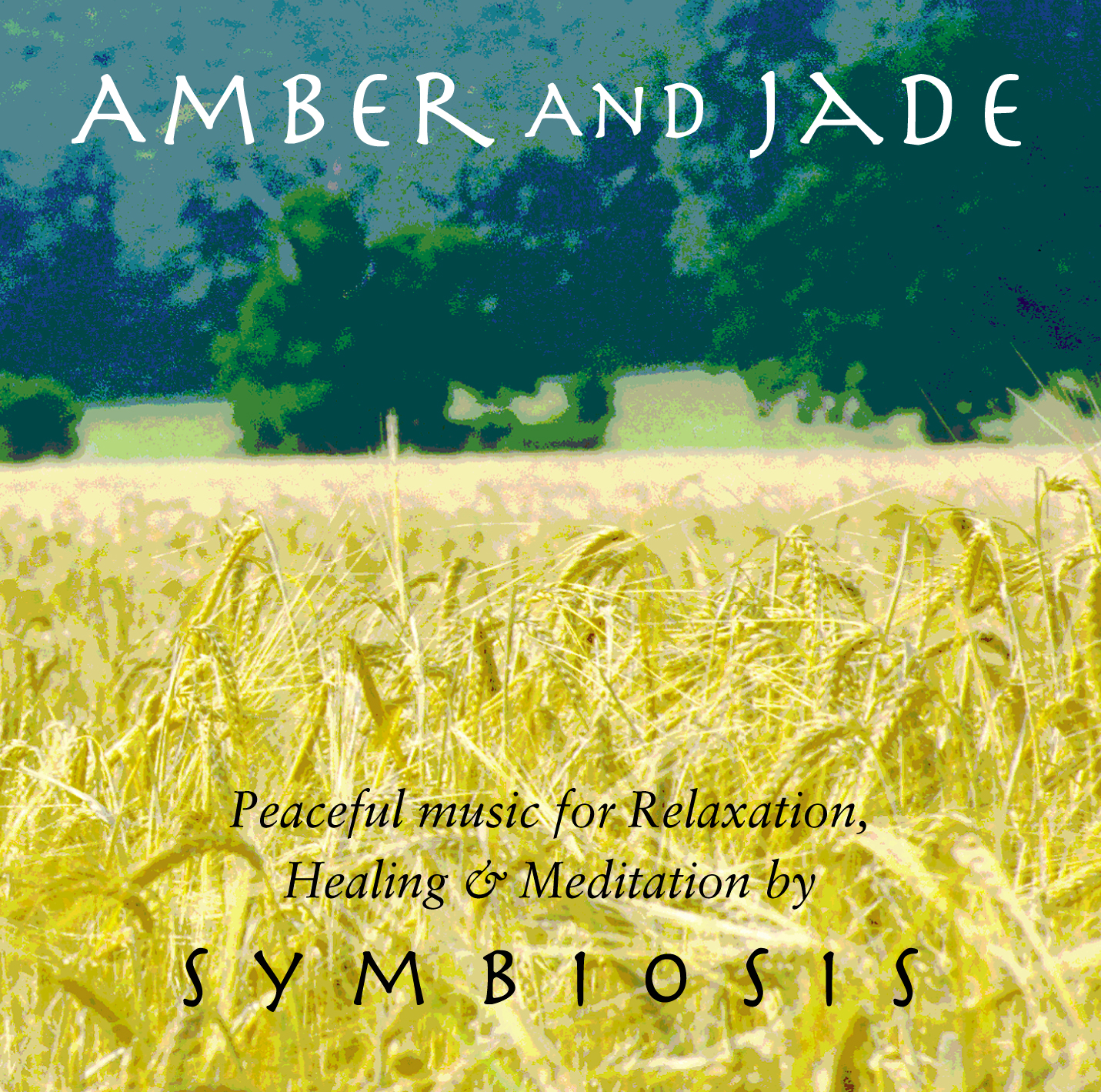
Amber & Jade – Original cover (supplied with CD)
“After the success of our album Touching the Clouds, with its Zen-like spacious quality,” says Clive, “we wanted to create a new album specially for relaxing listening and therapies which had a warmer, more pastoral feeling… so, inspired by our work with Denise Linn on her ‘Phoenix Rising’ guided meditations, we set about recording Amber and Jade. We made it more than long enough to play through a one-hour therapy session, using lots of natural instruments and sounds to bring lightness and breath to the work! The tracks blend gently into each other, giving a sense of continuous support and nurturing during holistic therapies such as massage, aromatherapy and reflexology, a bit like the therapist keeping continuous touch with the client so as not to break the flow!”
Sample Tracks
‘Their work has a rare honesty that grows out of their wish to do nothing more than create music that complements the therapist’s work… ‘ Brian Lee, Caduceus
Amber and Jade – Original cover (supplied with CD)
‘Their work has a rare honesty that grows out of their wish to do nothing more than create music that complements the therapist’s work… ‘ Brian Lee, Caduceus
Buy the Album ~ formats: CD or Digital Download
The CD version of this album is available from our Secure Online Store (including PayPal). For other options, follow the links below.


Download: Amber and Jade eBooklet